Nikunj Kothari, writing on X:
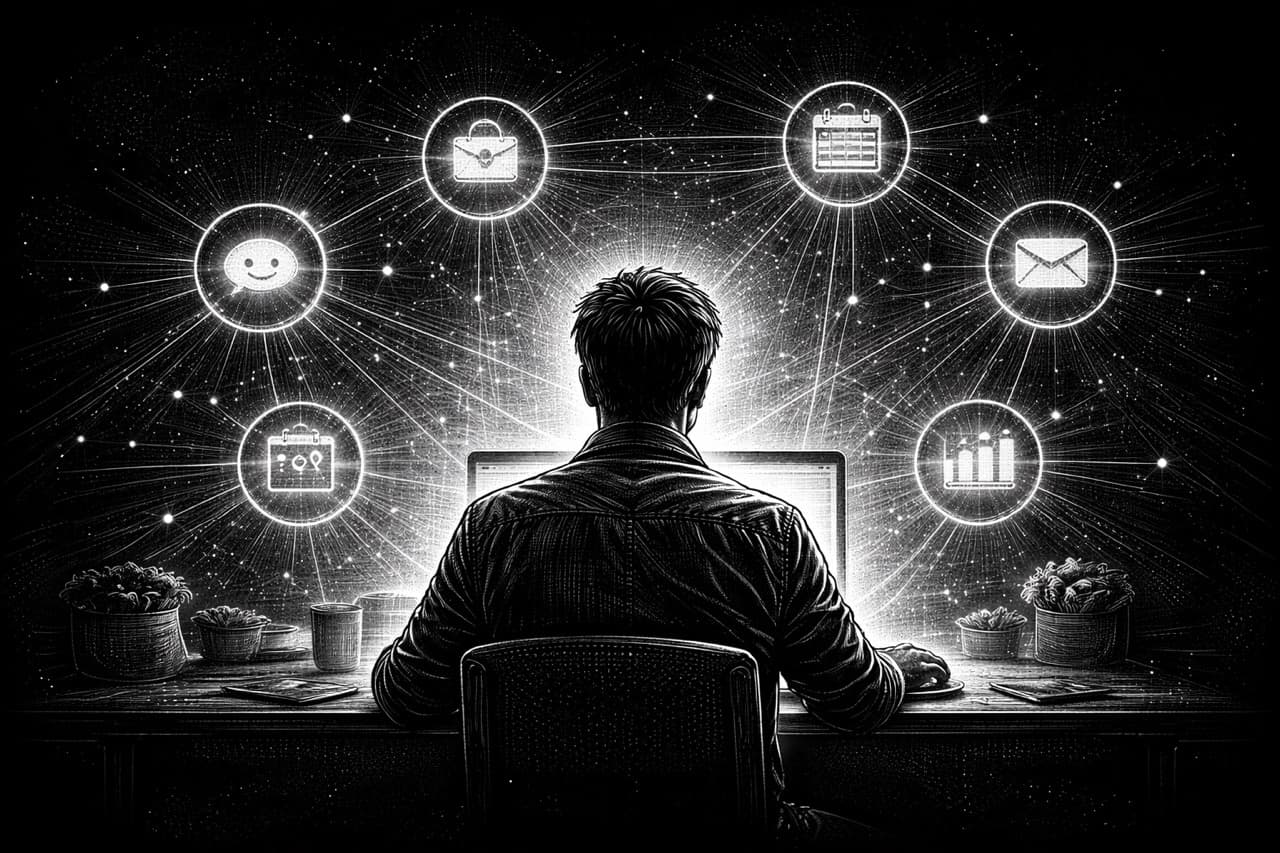
I replaced Netflix with Claude Code. I lie in bed thinking about what I can spin up before I fall asleep, what can run while I'm unconscious. Reading a novel feels indulgent now. Watching a movie without a laptop open feels wasteful. This voice in my head that says "something could be running right now" just doesn't shut off.
There is a good essay buried inside this post. The observation about borrowing animal domestication language — "leash," "slack," "harness" — for systems we do not understand is sharp. The image of waking up to grade homework you assigned in your sleep is memorable. Kothari is a good writer, and he's being honest about his own behaviour. That counts for a lot.
But there's a move happening here that is worth naming, because it happens constantly in San Francisco writing about technology: a very particular scene is being described as though it were the weather. "Nobody questions it anymore." "All the parties are sober now." These are observations about maybe a few hundred people within walking distance of Dolores Park, presented in the register of civilisational shift.
Most professionals encountering AI right now are not leaving parties to check on their agents. They are trying to work out whether the chatbot their company just licensed is actually useful, or whether the AI strategy their board is asking about needs to be more than a slide deck. Their anxiety is not that someone is out-shipping them at 2 a.m. It is that they do not yet understand the technology well enough to make good decisions about it.
Kothari calls the anxiety "rational, which is why it sticks." I would call it compulsive, which is why it feels rational. That is how compulsions work. The piece wants credit for self-awareness while changing nothing — the literary equivalent of saying "I know I shouldn't" while ordering another round. He recognises the pattern, names it clearly, and then shrugs: the agents come with me now.
That is his prerogative. But if you are a working professional reading this and feeling a knot in your stomach — some mixture of "am I falling behind?" and "is this what I'm supposed to become?" — it is worth pausing on a simple distinction.
There is a difference between understanding AI well enough to use it effectively in your work, and structuring your entire life around the anxious production of AI-generated output. The first is a professional skill worth developing at a sustainable pace. The second is a lifestyle choice being mistaken for a career strategy.
The window is not closing by the day. The tools are getting better and easier. The professionals who will do well with AI are not the ones who ship the most on a Saturday. They are the ones who understand what they are doing, and why, clearly enough to make good decisions on a Monday.
Stay current weekly
Get new commentary and weekly AI updates in the AI Primer Briefing.